The first mistake people make with AI agents is assuming the magic lives in the model.
I get why. The model is the visible part. It writes the code, answers the question, explains the plan, and occasionally says something strange enough that everyone in the room gets quiet for a second.
But after spending real time trying to turn agents from impressive demos into useful operators, I keep coming back to a different conclusion.
The model is not the agent.
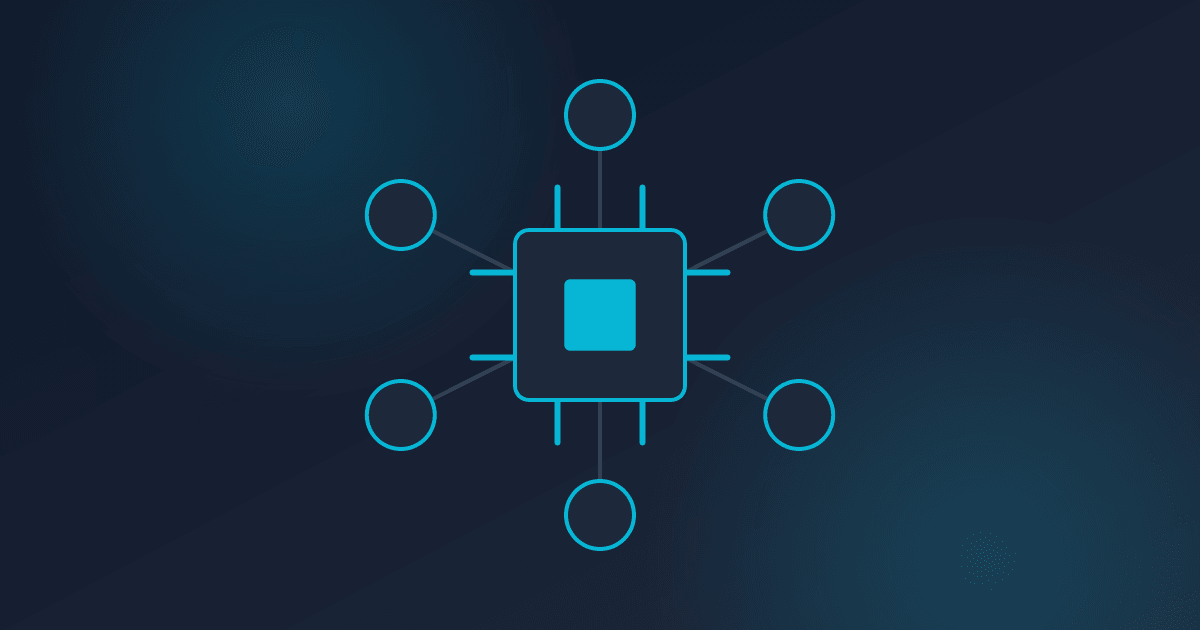
The agent is the whole system around it. The memory. The tools. The mission brief. The boundaries. The tests. The reviewer. The part that says, "you are not done until there is proof."
That was the useful lesson I took from the Fable/Mythos story. Not that frontier models are magic. Not that agents are solved. The lesson was harsher than that, and a lot more useful:
Intelligence without operational discipline is just an expensive way to generate plausible unfinished work.
A lot of the public conversation around agents still sounds like mythmaking. Give the system more context. Give it a better model. Give it tool access. Let it run longer. Somewhere in that mixture, autonomy is supposed to appear.
Sometimes it does, at least for a moment.
You get a flash of the future. The agent reads the codebase, finds the bug, writes the patch, runs the tests, and explains what changed. For a second, it feels less like software and more like delegation.
Then the illusion cracks.
The agent says it ran tests it did not run. It edits the wrong file. It gets halfway through the task and summarizes what it "would" do next. It produces a polished report with no artifact behind it. It optimizes for ending the conversation instead of finishing the mission.
That is the agent myth in its raw form: the belief that intelligence alone creates reliability.
It does not.
A smarter model helps. Obviously. Anyone pretending model quality does not matter is selling something. Better reasoning, longer context, stronger coding ability, and better tool use all move the line forward.
But model quality is only one layer. If the harness around the model is weak, the system still fails in familiar ways. It drifts. It overclaims. It loses state. It forgets constraints. It treats plausible language as evidence. It says "done" because "done" is a natural-sounding conclusion to a conversation.
A real agent needs a different standard.
The agent should satisfy the mission, not the chat
A naive agent tries to satisfy the chat. A useful agent tries to satisfy the mission.
That sounds like a small difference until you watch one fail.
The naive version gives you a plan. Maybe it writes a few files. Maybe it says the tests pass. The useful version actually runs the tests, captures the output, names the files it changed, admits what it could not verify, and leaves a trail another operator can inspect.
That gap is where most of the real work is.
This is what the Fable/Mythos story clarified for me. The interesting part was not just "look how capable the model is." The interesting part was the operating pattern around the model. The scaffolding. The memory. The evaluators. The loops. The pressure on the agent to behave less like a chatbot and more like a worker with a definition of done.
That framing changed how I think about agents.
I stopped asking only, "What model should this use?"
I started asking better questions:
- What counts as done?
- How does the agent prove it?
- Where does memory live?
- What can it touch?
- What must it never touch?
- What happens when it gets blocked?
- Who reviews the work?
- Can another agent, or another human, reproduce the result from the trail it left behind?
Those questions are not as exciting as a benchmark chart. They do not make for a flashy demo. But they are the difference between an agent that impresses you and an agent you can trust with actual work.
Autonomy needs more structure, not less
The strange part is that autonomy requires more structure, not less.
That feels backwards at first. We want autonomous agents because we want leverage. We want to stop micromanaging every step. We want to hand off a mission and get back a result.
But if the agent has no structure, every handoff becomes a gamble. It may solve the task. It may hallucinate success. It may modify something it should not have touched. It may bury the important failure under a confident summary.
Freedom without boundaries is not autonomy. It is drift.
The better pattern looks closer to how you would run a serious team.
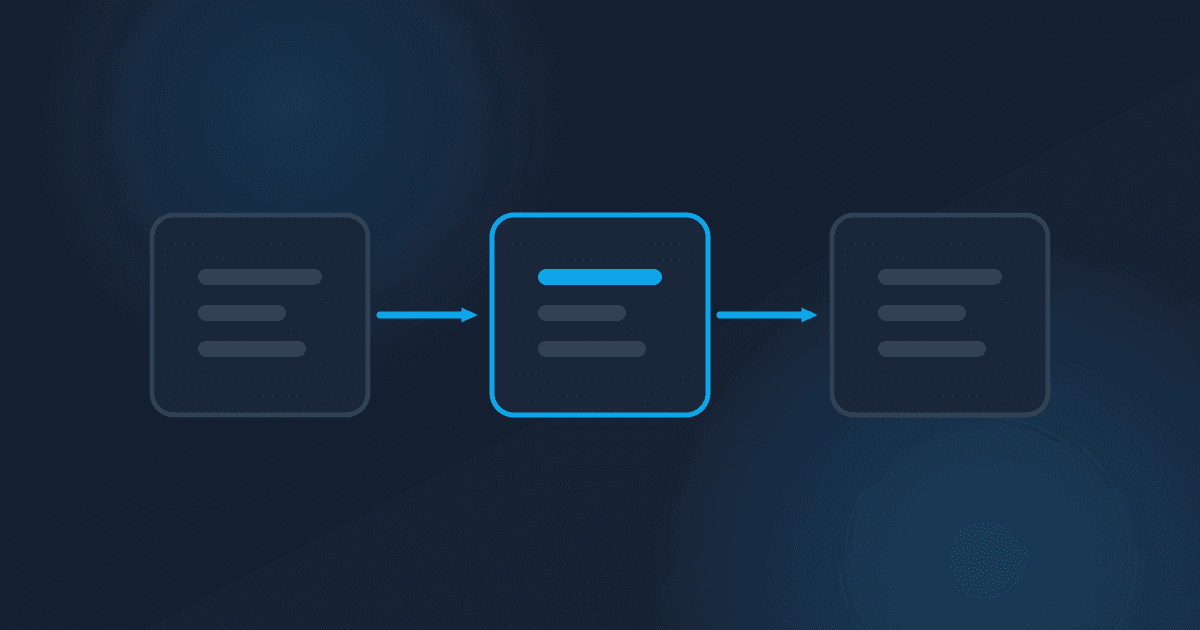
You define the mission. You define the operating area. You define what evidence is required. You make the agent report blockers instead of guessing. You make it preserve artifacts. You make it show its work. You add review. You make completion a gate, not a vibe.
In that world, the agent is not just "thinking." It is operating.
That distinction matters.
An operating agent does not say, "I would run the tests." It runs them.
It does not say, "the file was updated." It points to the file.
It does not say, "the build succeeded." It shows the command and the output.
It does not pretend uncertainty is confidence. If it cannot verify something, it says so and stops at the boundary.
That is less magical than the myth. It is also much more useful.
The future looks more like crews than chatbots
The real future of agents is probably not one giant omniscient model doing everything from a single prompt. At least not soon.
The more realistic path looks like crews: specialized agents with roles, memory, tools, and review loops. One implements. One reviews. One watches security. One keeps the mission log. One checks whether the claim matches the artifact.
That may sound less elegant than "just ask the AI."
Good.
Elegance is overrated when the system can touch real infrastructure, real code, real customers, or real money.
I do not want an agent that sounds smart.
I want an agent that can be held accountable.
That means proof. Logs. Tests. Diffs. Screenshots. Rollback paths. Clear scopes. Hard stops. A record of what changed and why.
This is where the Fable/Mythos lesson becomes practical. The fable is not that agents are fake. They are not. The capabilities are real, and they are getting better fast.
The fable is that the agent only becomes useful when the intelligence is wrapped in discipline.
The myth says: give the model enough power and it will figure everything out.
The fable says: give the model a mission, tools, memory, boundaries, and proof gates, then make it earn trust one verified result at a time.
That is a less glamorous story.
It is also the one builders should pay attention to.
The practical standard
If you are building with agents, do not start with the model alone. Start with the operating contract.
Write down what the agent is allowed to read. Write down what it is allowed to change. Write down what requires approval. Write down what proof it must produce before anyone accepts the result.
Then test the agent against that contract.
Can it stop when it is blocked?
Can it preserve the right workspace?
Can it avoid claiming success without evidence?
Can it hand work to a reviewer cleanly?
Can it leave behind enough context that tomorrow's operator does not have to reconstruct the entire mission from vibes and chat history?
Those are production questions. They are not as fun as asking how many tokens fit in a context window, but they matter more once the system touches real work.
The next generation of agents will not be defined only by who has the biggest model. It will be defined by who builds the best operating discipline around the model.
The model matters. The mythos matters too. People need stories to understand new technology.
But the fable is what survives contact with production:
Autonomy is not the absence of structure.
Autonomy is what becomes possible after the structure is strong enough to trust.
If your organization is experimenting with AI agents, Edwards Consulting Group can help turn those experiments into governed operating workflows with the right automation, guardrails, and proof gates around them.
Written by
Chris EdwardsPrincipal Consultant, Edwards Consulting Group
Chris Edwards is the principal consultant at Edwards Consulting Group, where he helps organizations reduce AWS spend, harden their cloud security posture, and put AI to work in production. He writes about cloud architecture, FinOps, cybersecurity, and practical AI integration drawn directly from client engagements.
More about Chris Edwards→