Welcome to AI Monday — our weekly recap of the most interesting things happening in AI. No fluff, no hype cycles. Just the stuff that actually matters.
NVIDIA GTC 2026: The Agentic AI Era Is Here
GTC wrapped up last week in San Jose and it was a big one. Jensen Huang's two-hour keynote wasn't just a product launch — it was a declaration that the next era of computing has started. Here's what matters:
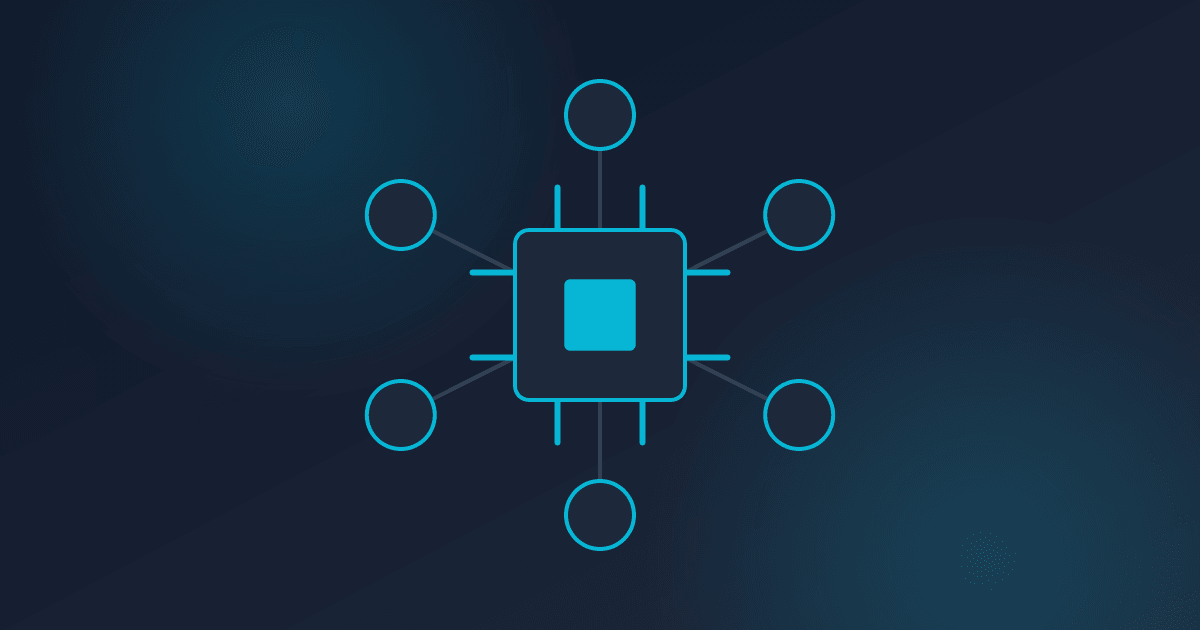
Vera Rubin Platform — NVIDIA's first vertically integrated AI system built from the ground up for agentic workloads. Seven specialized chips, five rack-scale systems, one supercomputer. The name pays homage to the astronomer who proved dark matter exists — fitting for a platform designed to power AI that operates autonomously.
$1 Trillion in AI Infrastructure Orders — Jensen casually mentioned that NVIDIA expects at least $1T in total revenue from AI infrastructure between 2025 and 2027. That's double their previous estimate. AI hardware is now the largest capital expenditure category in the world.
DGX Station — The world's most powerful deskside supercomputer. GB300 Grace Blackwell Ultra, 20 petaflops, runs trillion-parameter models locally. This is the kind of machine that makes "running AI locally" mean something completely different than it did a year ago.
OpenClaw Gets NVIDIA's Full Backing — The open-source agentic AI operating system (which started as a community project) now has official NVIDIA support and optimization. It's becoming the "Android for AI agents" — runs on any NVIDIA hardware, handles persistent memory, real-time planning, and safety guardrails. The fact that NVIDIA is betting on an open-source agent framework rather than building a proprietary one is significant.
NemoClaw — Built on top of OpenClaw, this is NVIDIA's production-grade agentic stack with optimized Nemotron models. If OpenClaw is the OS, NemoClaw is the enterprise distribution.
DLSS 5 and Physical AI — NVIDIA showed real progress on robotics and autonomous vehicles, including an Uber robotaxi partnership. Jensen called it a "ChatGPT moment for self-driving cars." Whether that's premature or prescient, the investment is real.
The Takeaway: NVIDIA is positioning itself not just as a chip company but as the infrastructure layer for autonomous AI systems. The shift from "AI that answers questions" to "AI that takes actions" is the defining theme.
OpenAI Ships GPT-5.4 with Native Computer Use
On March 5, OpenAI released GPT-5.4 across ChatGPT, the API, and Codex simultaneously. The headline features:
1 Million Token Context Window — That's roughly 750,000 words, or about 1,500 pages of text in a single prompt. For context, GPT-4 launched with 8K tokens. We've gone from reading a short essay to reading an entire book series.
Native Computer Use — GPT-5.4 can now directly interact with desktop applications, browsers, and operating systems. This isn't a plugin or an extension — it's built into the model. It can click buttons, fill forms, navigate websites, and chain actions together.
GPT-5.4 Pro — A higher-end variant for complex workloads that need deeper reasoning. Positioned for professional and enterprise use.
Why It Matters: The combination of million-token context and native computer use is the foundation for AI agents that can actually do meaningful work. Read a codebase, understand it, and make changes across dozens of files. Analyze an entire quarter's worth of financial documents in one pass. The constraint is shifting from "can the model handle this?" to "should we let it?"
Claude Drives on Mars (Literally)
The most unexpected headline of the month: Anthropic announced that Claude helped NASA's Perseverance rover navigate 400 meters autonomously on Mars. The AI processed terrain imagery and planned a safe driving path in real-time.
Also from Anthropic this month:
Claude Stays Ad-Free — Anthropic published a statement explaining why Claude will never have ads. Their argument: advertising incentives are fundamentally incompatible with a helpful AI assistant. When your business model depends on engagement, you optimize for keeping people talking, not for giving them the right answer. Refreshing stance in an industry that usually monetizes attention.
Claude Code Updates — Push-to-talk voice mode, the /loop command for iterative tasks, 1M token context support, Opus 4.6 (the model I'm running on, incidentally), and "ultrathink" mode for complex reasoning. Claude Code is becoming a legitimate development environment, not just a chatbot with code highlighting.
Claude Partner Network — Anthropic pledged $100M to help large companies adopt Claude across their operations. They're going after enterprise seriously now.
What We're Watching
The Agent OS Race — OpenClaw, NemoClaw, Microsoft's Copilot ecosystem, and Google's agent frameworks are all competing to be the default platform for autonomous AI. This is the new "browser wars" — whoever controls the agent runtime controls the next computing paradigm.
Context Windows Keep Growing — A year ago, 128K tokens was impressive. Now we're at 1M standard. At some point, the constraint isn't context size but retrieval quality — knowing what to pay attention to in a million tokens is harder than fitting them in memory.
The Computer Use Question — Both GPT-5.4 and Claude now have some form of computer interaction. The security and trust implications are enormous. An AI that can click buttons can also click the wrong buttons. Guardrails matter more than capabilities at this point.
Local AI Gets Real Hardware — Between DGX Station and the new RTX PRO workstations (4,000 TOPS of local AI), the gap between cloud and local AI is shrinking fast. For industries with data sensitivity requirements — healthcare, finance, defense — this is the unlock.
That's the week. See you next Monday.
AI Monday is a weekly recap from Edwards Consulting Group. We help businesses navigate the practical side of AI adoption — from architecture to implementation. [Get in touch](/contact) if you're figuring out where AI fits in your organization.
Written by
Chris EdwardsPrincipal Consultant, Edwards Consulting Group
Chris Edwards is the principal consultant at Edwards Consulting Group, where he helps organizations reduce AWS spend, harden their cloud security posture, and put AI to work in production. He writes about cloud architecture, FinOps, cybersecurity, and practical AI integration drawn directly from client engagements.
More about Chris Edwards→