Here is a question I ask every business owner who tells me they are "going all in on AI":
What are you actually asking the model to do?
The answers are almost always the same. Summarize documents. Draft emails and proposals. Pull data out of invoices and PDFs. Classify support tickets. Answer questions about internal policies. Clean up meeting notes. Write the first draft of a report someone will edit anyway.
Then I ask the second question: where does that data go while the model does it?
That is when the room gets quiet.
Because the honest answer, for most small and mid-sized businesses, is that customer records, contract terms, financial details, and sometimes regulated data are flowing out of the building and into a frontier AI provider's cloud, under a consumer-grade account, with nobody having read the data processing terms.
The work is real. The value is real. But there is a mismatch hiding in plain sight: most of these tasks do not need a frontier model at all. They need a capable model. And in 2026, a capable model fits in a box on your own network.
The frontier is overkill for the everyday
Frontier models — the biggest hosted models from the major labs — are genuinely remarkable. If you are doing novel research, building complex agents, or working on hard reasoning problems, they earn their price and their cloud dependency.
But that is not what most businesses are doing.
Most business AI work is what I would call "competent knowledge work at volume." Read this, summarize that, extract these fields, draft this response, check this document against that policy. It is valuable precisely because it is repetitive, not because it is hard.
And the open-weight models you can run yourself have quietly gotten very good at exactly this class of work. Models like OpenAI's gpt-oss-120b, Meta's Llama 4 Scout, and the current Qwen and DeepSeek releases run comfortably on a single machine with 128GB of unified memory — a Mac Studio, one of the AMD Ryzen AI Max mini PCs, or NVIDIA's DGX Spark. That is a one-time hardware cost in the range of a few thousand dollars. Not a data center. Not a rack. A box.
For summarization, drafting, extraction, classification, and question-answering over your own documents, the quality gap between these models and the frontier has narrowed to the point where, for most everyday tasks, your team will not notice the difference.
What they will notice is everything that stops leaving the building.
The real product is the risk you remove
When your AI runs locally, the risk conversation changes shape entirely.
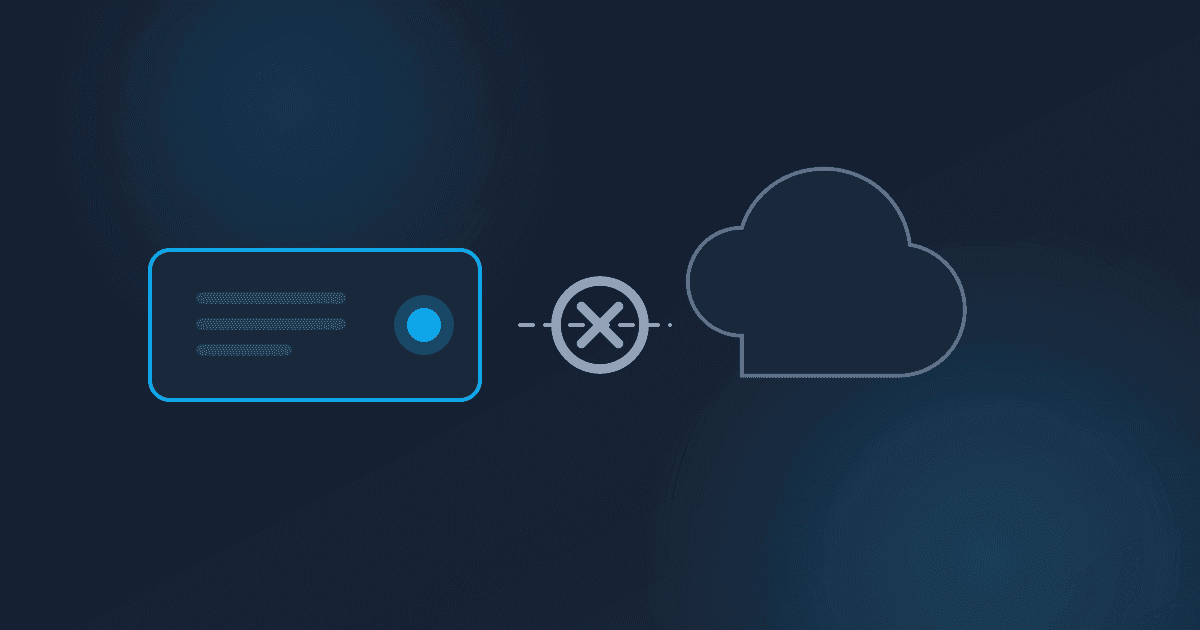
Customer data never transits a third party. There is no vendor data-retention policy to audit, because there is no vendor holding the data. There is no question about whether your prompts are training someone else's model. There is no subprocessor list to chase down. There is no breach notification letter to write when an AI provider you have never met has an incident.
You are not eliminating risk — a local model still needs access controls, logging, and sensible boundaries, and I will be the first to tell you that a box in a closet with no governance is its own problem. But you are converting a third-party risk you cannot see into a first-party risk you can actually manage. For a small organization, that trade is almost always worth making.
And right now, two regulatory currents are turning that trade from "worth making" into "hard to avoid."
CMMC makes the boundary the whole game
If you touch Department of Defense work, you already know the Cybersecurity Maturity Model Certification stopped being theoretical. Enforcement began in November 2025, and on November 10, 2026, Phase 2 arrives: contractors handling Controlled Unclassified Information will need a third-party assessment from a C3PAO, not a self-attestation. Roughly 80,000 companies need Level 2 certification, and there are only about 80 authorized assessment organizations to go around. Assessment slots are already scarce.
CMMC assessments are fundamentally about your boundary — where CUI lives, where it flows, and whether every system that touches it meets the 110 controls of NIST SP 800-171.
Now think about what happens when an employee pastes CUI into a commercial AI chatbot.
That provider just entered your data flow. Under DFARS rules, cloud services handling covered defense information are expected to meet FedRAMP Moderate-equivalent standards, and your assessor is going to ask how you know your AI vendor does. For most frontier AI subscriptions — especially the consumer tiers employees actually sign up for — the answer is: you don't, and it doesn't.
A local model inverts this. The model runs inside the boundary you already have to certify. The CUI never leaves the environment you already control, log, and monitor. Instead of expanding your assessment scope to include an AI vendor's cloud, you shrink the AI question down to one more system inside your existing enclave. For a contractor staring down an 18-month wait for an assessment slot, "we run it locally, here are the controls" is a dramatically better sentence than "we sent it to a chatbot, here is their trust page."
The banking regulators just changed the exam
The same logic is landing in financial services, just wearing a different uniform.
In April 2026, the Federal Reserve, OCC, and FDIC jointly issued SR 26-2, the first modernization of model risk management guidance since 2011. And beyond the formal guidance, the practical change is happening inside examinations: AI questions are now standard. Examiners are asking banks to map where AI is deployed — credit decisions, KYC, sanctions screening, customer service — and to answer three uncomfortable questions:
Is the AI drawing on data it was never authorized to use? Can you shut it down if it misbehaves? And are your AI vendors, and their subcontractors, held to the same standards regulators hold you to?
That third question is the killer for frontier-model dependency. If a community bank or credit union routes customer interactions through a hosted frontier model, it now owns the job of demonstrating that the provider — and everyone the provider relies on — meets bank-grade third-party risk standards. Industry surveys show most banks admit they are least prepared on exactly the points examiners now ask about first: kill switches and AI failure reporting.
A local model does not make those questions disappear, but it makes them answerable. Where does the data go? Nowhere. Can you shut it down? Unplug it. Who are the subcontractors? There aren't any. Your third-party risk program shrinks from "audit a frontier lab's supply chain" to "manage a server."
For the small institutions and fintech-adjacent businesses I work with, that is the difference between an exam finding and a checkmark.
The pattern I recommend: local by default, frontier by exception
None of this means frontier models are off the table. It means they should be a deliberate choice, not a default.
The pattern that works looks like this:
Run a large open-weight model locally as your workhorse. Point your everyday workloads at it — summarization, drafting, extraction, internal Q&A over your documents. Put your customer data, your CUI, your account records through this path and only this path.
Reserve frontier models for the tasks that genuinely need them — and when you use them, do it through a business agreement with proper data terms, with data classification rules about what is allowed to go there, and with logging so you can prove what did.
Write both paths down. Which data classes are allowed where. Who approved the exception. How you would turn either one off. That single page of policy is worth more in a CMMC assessment or a bank exam than any vendor's marketing whitepaper.
The quiet truth of 2026 is that the capability required for most business AI moved down-market faster than the risk conversation did. The frontier labs still own the ceiling. But the floor — the everyday, valuable, repetitive work that actually moves a small business — now fits on hardware you can own, inside a boundary you can defend.
Most organizations do not have a model problem. They have a boundary problem. Solve the boundary, and the model question gets a lot cheaper — in dollars, and in risk.
If your organization is trying to figure out where local models fit — or facing a CMMC assessment or bank exam with AI questions on it — Edwards Consulting Group can help you design the boundary, stand up the hardware, and write the governance that makes it defensible.
Written by
Chris EdwardsPrincipal Consultant, Edwards Consulting Group
Chris Edwards is the principal consultant at Edwards Consulting Group, where he helps organizations reduce AWS spend, harden their cloud security posture, and put AI to work in production. He writes about cloud architecture, FinOps, cybersecurity, and practical AI integration drawn directly from client engagements.
More about Chris Edwards→