The part of TypeSafe's launch that caught my attention was the decision to give up text generation.
That is a surprising choice in an industry where the most visible demonstration of intelligence is a model writing something. An explanation. A program. A research report. A convincing answer to a difficult question.
TypeSafe built Jev around a different output: a decision that another piece of software can use directly.
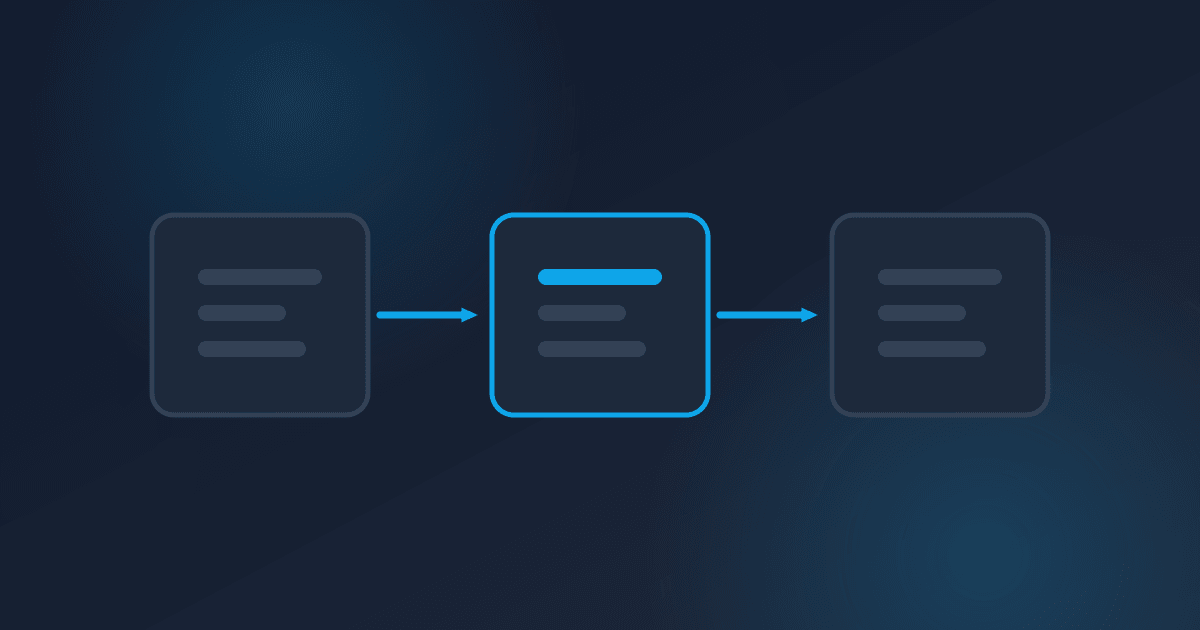
Give it context. Define what you want evaluated. Specify the possible answers. Get back structured results and probabilities.
That sounds modest until you start thinking about how much software needs to recognize meaning, compare information, or choose among options. Those judgments do not always need a paragraph. Sometimes the paragraph is extra work the system has to produce, transmit, and interpret before anything useful happens.
TypeSafe calls its approach a System One model, with Jev as its first public release. The design centers on focused judgments that fit inside a larger program. TypeSafe's introduction explains the basic idea.
What interests me is how consistently the rest of the system follows that decision.
What Jev actually is
Jev understands natural-language input and returns answers within an explicitly defined set of possibilities. It does not generate prose, write code, or explain its reasoning in a narrative. Its job is to evaluate the information it receives and produce a result the surrounding software can inspect.
The System One name draws on the distinction Daniel Kahneman popularized between fast, intuitive judgments and slower, deliberate reasoning. That is the intended shape of the work: focused evaluations with the relevant context already available. TypeSafe's System One documentation describes the model and its scope.
The input is called state. That can be a passage of text, a collection of records, or a structured representation of what is happening inside an application. The questions are supplied separately. This lets you keep the material being evaluated distinct from the instructions for evaluating it. The state documentation shows the supported forms.
There are three kinds of question:
Choice: Which predefined option fits? For example, classify a passage as an explanation, an instruction, an opinion, or something else.
Score: Where does the input fall on defined levels? For example, rate how relevant a passage is to a supplied question.
Noul: How likely is a statement to be true? For example, does this passage explicitly support the supplied claim?
Choice and Score return distributions across the options or levels, along with a confidence measure. Noul returns a value between zero and one representing the probability of “yes.” Your code decides how to use those signals. TypeSafe's primitives guide defines the interface.
The difference goes deeper than structured output
It would be easy to look at that interface and conclude that the innovation is getting a model to return JSON.
Existing LLM APIs already support constrained output formats. OpenAI's Structured Outputs, for example, can enforce a supplied JSON schema. A fair comparison has to acknowledge that capability. OpenAI's documentation describes it directly.
TypeSafe's more interesting proposition is the combination underneath the interface. The company describes a model architecture, a parallel sampler, and a training method built around producing decisions and probabilities. It calls that training method Reinforcement Learning for Calibrated Decisions, or RLCD. Those are the company's descriptions; its public materials do not provide a complete recipe for reproducing the model. The launch announcement introduces the design.
The engineering idea is to align the model's output, training objective, and execution pattern with the job it will perform.
That is what makes this worth examining. Formatting is one part of the interface. TypeSafe is working on what the model is optimized to produce in the first place.
Uncertainty becomes part of the interface
Calibration is central to that approach.
Suppose a model assigns an outcome an 80% probability across many comparable cases. If those outcomes occur about 80% of the time, the probabilities carry useful information. Calibration describes that relationship across predictions. It does not guarantee that a particular answer is correct.
RLCD is intended to train the model toward useful decisions with probabilities that reflect uncertainty. TypeSafe's AI primer explains that objective.
There is an important implementation detail: the confidence field returned with Choice and Score is computed from the shape of the probability distribution. A distribution concentrated on one option indicates a clearer preference than one spread across several options. That confidence value is not simply a percentage probability that the selected answer is correct. The confidence documentation explains the distinction.
For a developer, this creates another signal to work with. An ambiguous result can trigger more retrieval, a different model, or review. A sufficiently reliable result can continue through the existing program.
The thresholds still need testing on the actual task. But the uncertainty is exposed in a form the program can use, which makes it part of the system's behavior.
Parallel questions change how you build
This is the part I find especially clever.
Imagine evaluating a document. You need to know its topic, its relevance to a question, whether it supports a claim, and whether it contradicts another supplied passage.
Those judgments can be independent. Asking one does not necessarily require waiting for the answer to another.
TypeSafe evaluates independent questions against the same state in parallel. Its documentation says adding questions within the request budget typically adds little latency. The application can ask for several signals together and use whichever ones become relevant. TypeSafe's parallel-question pattern describes the approach.
That makes decomposition more practical. Instead of hiding several criteria inside one broad question, you can expose each criterion separately and combine the results in code.
There is still a dependency when one answer determines what information must be retrieved next. In that case, the application needs another step. Parallel evaluation works for questions whose inputs are already available. The primitives guide makes that boundary clear.
I like the incentive this creates. Make the question smaller. Make the criteria explicit. Inspect the result. Keep the combination logic somewhere you can read and change it.
That is a useful way to build software.
The surrounding program still matters
Jev fits inside an application that gathers context, asks questions, combines results, and carries out actions. TypeSafe's implementation guidance keeps control flow and exact rules in ordinary code, with the model handling the judgments that need language understanding. Its guide to building with System One lays out that separation.
This connects with something I wrote in Agents Are Not Magic. They Are Systems.: the useful capability comes from the whole system around the model.
Several general applications follow naturally from this design:
- Retrieval: score candidate passages before choosing what enters another model's context.
- Classification: apply a defined set of categories across a collection of inputs.
- Evidence checking: assess whether supplied material supports a generated claim.
- Model routing: use focused judgments to help select an appropriate handler or model.
These are patterns TypeSafe discusses in its use-case documentation. Each still needs evaluation against the task it is supposed to perform. A fast check is useful when it catches meaningful errors without creating too many new ones.
Why the speed and economics deserve attention
TypeSafe launched Jev in early access on September 15, 2026. It reports 193.6 times faster and 444.6 times cheaper performance in its workflow evaluations, while acknowledging those figures may be toward the high end of real-world gains. Those are the vendor's reported results for the tested workloads. I have not independently reproduced them. Launch results and qualifications.
The evaluation method also matters. The published comparisons use reference answers derived from other models. They measure agreement with that reference across four structured workflows, which is useful evidence with a specific scope. It does not establish universal correctness. TypeSafe's evaluation methodology.
The pricing illustrates why developers are paying attention. The September rate shown in TypeSafe's cookbook is $0.042 per million input tokens. At that rate, one billion input tokens would cost $42. Actual application costs depend on context size, additional requests, surrounding infrastructure, and any review work. Published pricing in the cookbook.
What interests me is what lower cost makes possible. A developer can consider evaluating more candidates, checking more outputs, or asking more focused questions throughout a program.
That can change the architecture of the application. Work that was too expensive to perform routinely may become practical to perform by default.
A constraint that creates room to build
There is one claim I would read carefully in the launch material: “zero hallucinations.” TypeSafe ties that claim to outputs being constrained to the expected schema. A model can still select the wrong option from a perfectly valid list. Type safety solves a real interface problem; semantic accuracy remains something to measure. TypeSafe's explanation of the guarantee.
I would evaluate Jev using inputs with known outcomes, track the errors, and check whether its uncertainty signals actually identify difficult cases. Speed and price become much more interesting once the decisions are useful.
Even with that work ahead, I find the design compelling.
TypeSafe has taken a capability we usually encounter through conversation and given it an interface built for composition. The questions are explicit. The possible answers are bounded. The uncertainty is visible. Independent judgments can be evaluated together. The surrounding code determines what happens next.
Each choice reinforces the others.
That is the ingenuity here: recognizing how much can be built from a model with a carefully defined job, then engineering the system around that job.
I am interested in seeing what developers make with it. A small, fast judgment that fits cleanly inside a program can become a building block in places where a conversation never belonged.
Written by
Chris EdwardsPrincipal Consultant, Edwards Consulting Group
Chris Edwards is the principal consultant at Edwards Consulting Group, where he helps organizations reduce AWS spend, harden their cloud security posture, and put AI to work in production. He writes about cloud architecture, FinOps, cybersecurity, and practical AI integration drawn directly from client engagements.
More about Chris Edwards→